 ©
Contribute
©
Contribute
©
Contribute
©
Contribute
AI training and data centers are constrained by power, not only chips. They need electricity that is available around the clock, carbon-free where possible, dense enough to site near compute, and financeable at scale. Superhot rock geothermal is built for that firm layer: supercritical heat above ~374 °C, roughly 5–10× the energy per well of conventional geothermal, modeled at about $20–35/MWh, with a small land footprint.
Hyperscale AI and cloud campuses draw continuous megawatts — often hundreds of megawatts per site — for training and inference. Grid interconnection queues are long; local utilities cannot always add firm capacity on AI timelines. Operators respond with power purchase agreements (PPAs), behind-the-meter generation, and temporary bridges such as natural gas turbines. The strategic question is which sources can supply firm, clean watts for decades without locking in emissions or land-intensive infrastructure.
Data centers need high capacity factor. Intermittent generation needs storage or backup to match 24/7 load.
Gas turbines can show up fast. Clean firm options must become as bankable and deployable — or the bridge becomes permanent.
Dense compute prefers dense energy: small footprint, low local pollution, predictable operations.
The industry needs a shared front door, not another awareness campaign. SuperhotGeo can collect comparable demand, supply, site, capability, and policy signals; review them; and bring the right parties into a focused diligence process.
Every submission should advance through the same visible, evidence-based stages.
No single technology wins every site. The table below is a screening lens for offtakers and developers: what each option is good at, and where superhot geothermal fits once commercial drilling and materials catch up to the resource.
| Source | 24/7 firm? | Carbon-free? | Fit for data centers |
|---|---|---|---|
| Natural gas turbines Bridge | Yes — dispatchable | No (CO₂ + local pollutants) | Fast to deploy when the grid lags. Buy time, not the permanent stack. Permitting and community constraints grow with scale. |
| Solar PV Intermittent | No without storage / backup | Yes when generating | Lowest energy cost by day in many regions. Firming for night and winter needs batteries or another firm source; land use is high per firm MW. |
| Wind Intermittent | No without storage / backup | Yes when generating | Strong regional resource in many grids. Same firming problem as solar for continuous compute; transmission and siting often dominate. |
| Nuclear Firm clean | Yes | Yes (operational) | Excellent baseload profile. Long lead times, complex licensing, and site constraints limit how fast new capacity can follow AI load. |
| Conventional geothermal Firm clean | Yes (high capacity factor) | Yes | Proven 24/7 power with tiny land use. Limited to natural hydrothermal systems in relatively few regions — not enough alone for global AI growth. |
| Superhot rock geothermal Superhot | Yes — designed for firm baseload | Yes | Supercritical water (>~374 °C) carries far more energy than ordinary steam — roughly 5–10× power per well vs conventional geothermal. Modeled costs about $20–35/MWh. Small footprint. Goal: firm clean power in far more places once deep hard-rock drilling and high-temperature wells are commercial. Remaining work is engineering, not basic science. |
Modeled superhot cost and energy-per-well figures synthesize public industry sources (including CATF and IDDP-linked analyses). Site results vary; commercial superhot plants are still scaling. SuperhotGeo publishes the project and well record so buyers can see what is measured vs modeled.
Geothermal capacity factors commonly exceed 90%. That matches continuous AI training and inference better than weather-dependent generation alone.
Above the critical point of water (~374 °C), enthalpy step-changes. Superhot wells aim for several times the output of a conventional geothermal well — fewer wells per MW of firm capacity.
Firm geothermal uses far less land per megawatt than solar- or wind-plus-storage for the same continuous load — relevant where campuses compete for acreage and transmission.
Modeled superhot LCOE in the ~$20–35/MWh range targets competitiveness with gas for firm power, without fuel price volatility, once drilling rates and materials mature.
Next-generation geothermal is already contracted by major tech buyers (e.g. Google × Fervo; Meta × geothermal developers). Superhot multiplies the resource those offtake models can unlock.
Solar and wind remain critical. Gas may remain a bridge. Superhot geothermal is a candidate permanent firm layer — the part of the stack that runs when intermittent resources do not.
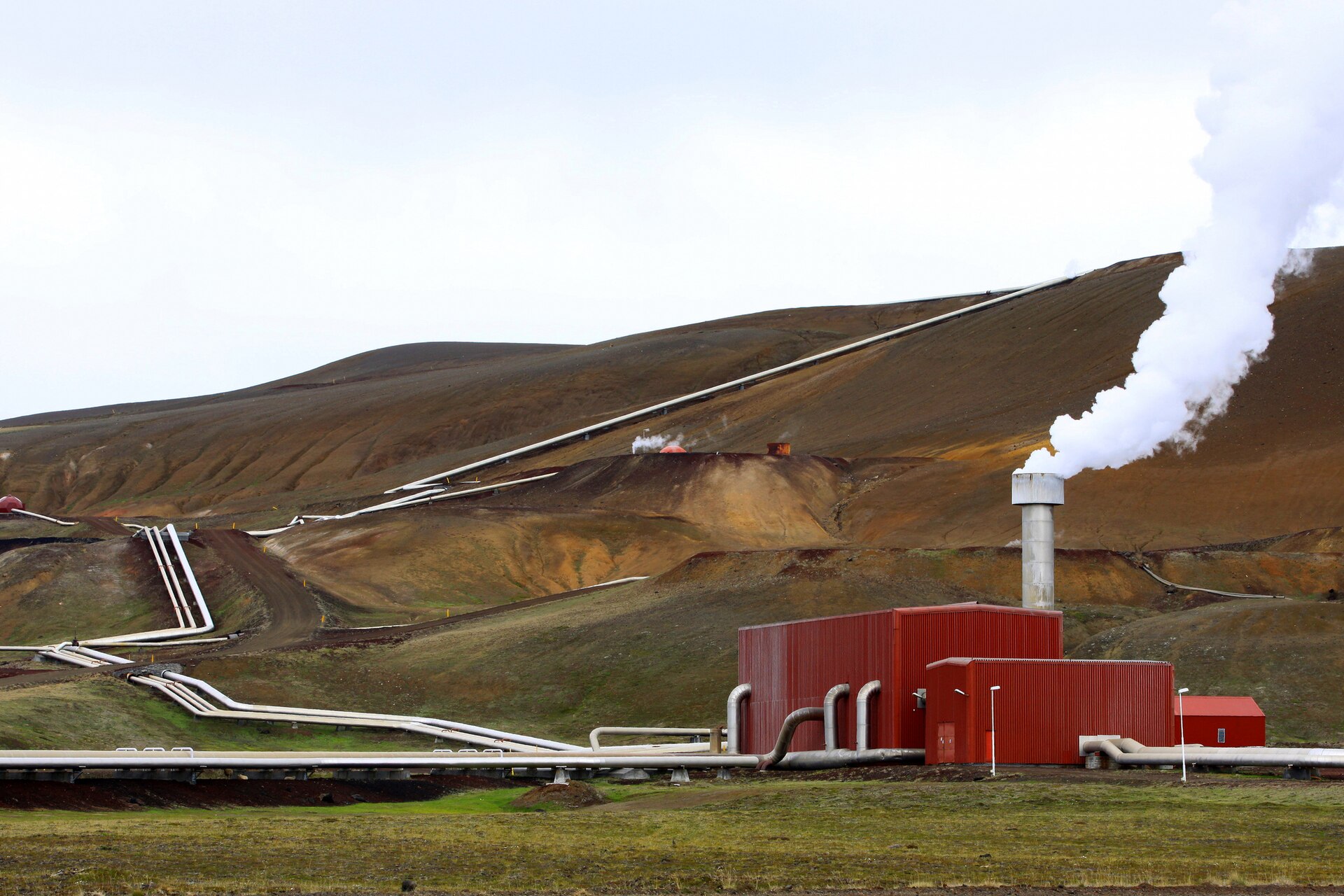
SuperhotGeo does not operate turbines or sell megawatts. It is the global hub where superhot and next-generation geothermal projects, well records, failure lessons, research, people, and capital connect — so developers can de-risk faster and energy buyers (including data centers and AI compute operators) can see what is real, what failed at temperature, and what is financeable next.
Screen projects and regions, understand engineering readiness, and connect to offtake and financing pathways for firm clean geothermal.
Share well and field lessons, list capabilities, and reach power buyers who need 24/7 clean capacity for compute loads.
Curated projects, library, and assistant via web, app, JSON API, and MCP — so diligence tools and agents can cite the same record.
AI training and inference run around the clock. Data centers need electricity available 24/7 (firm power), not only when the sun shines or the wind blows. Intermittent renewables need large storage or firm backup; interconnection queues often lag demand. That is why operators buy firm clean power directly and sometimes deploy on-site generation.
Gas turbines deliver firm power quickly and often bridge when the grid cannot keep up — but they emit carbon and local pollutants and face permitting pressure at scale. Superhot rock geothermal targets firm, carbon-free power from supercritical heat (>~374 °C): roughly 5–10× energy per well vs conventional geothermal, modeled at about $20–35/MWh once drilling and high-temperature materials are commercial. Gas buys time; superhot is a candidate permanent firm layer.
Solar and wind are low-cost and clean when generating, but intermittent. Making them firm usually means storage or fossil backup and more land. Geothermal is built for high capacity factor and small footprint. Offtakers will often use a mix; superhot geothermal is designed for the firm layer of that mix.
Yes. Examples include Google offtaking next-generation geothermal from Fervo Energy in Nevada, and Meta contracting geothermal capacity for data center loads. Superhot rock multiplies energy per well and expands where firm clean power can be developed.
Developers build wells and plants. SuperhotGeo is the shared record and network: wells and failure lessons, projects, research, people, offtake matching, and financing pathways — so the whole field, including energy buyers for AI and data centers, can move faster with less duplicated risk.
Browse projects and the science on SuperhotGeo, join the network, or email info@superhotgeo.com if you buy or develop firm power for compute.